
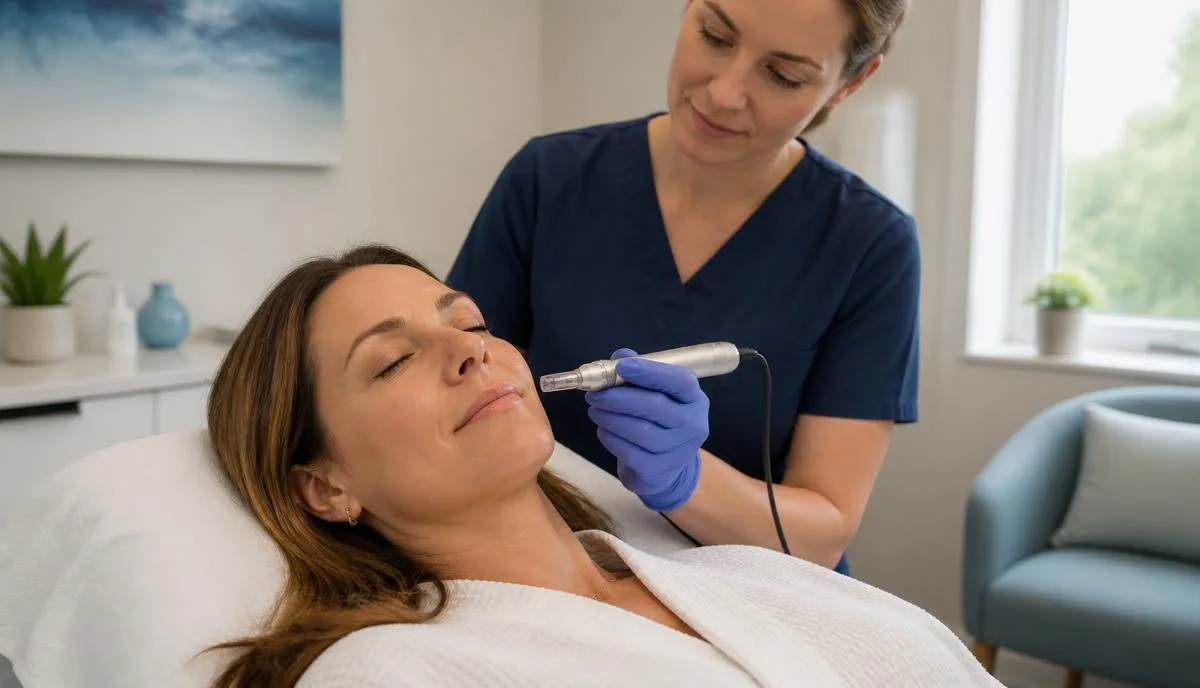
SkinPen Microneedling in Clear Lake, TX: What to Expect
SkinPen microneedling at Magnolia Health & Wellness in Clear Lake, Houston uses fine sterile needles to trigger your own collagen repair, softening acne scars, fine lines, and uneven texture. Here is what a session feels like, how long redness lasts, how many treatments most people need, and when another option makes more sense.
SkinPen microneedling is an FDA-cleared treatment that uses very fine, sterile needles to create controlled micro-injuries in the skin, which prompts your body to build new collagen and elastin over the following weeks. Most people come in for acne scars, fine lines, uneven texture, or skin that has simply lost its bounce, and most see the clearest change after a series of three to six sessions rather than a single visit.
At Magnolia Health & Wellness in Clear Lake, we offer SkinPen microneedling at our office on Egret Bay in Houston, TX 77058, serving patients across Clear Lake, League City, Webster, Friendswood, Kemah, Seabrook, and Pearland.
If you have been looking in the mirror lately and thinking your skin looks tired even when you feel fine, you are not imagining it. Texture, tone, and firmness change gradually, and by the time you notice, the shift has usually been underway for a while.
What SkinPen microneedling actually is
SkinPen is a handheld medical device with a sterile, single-use cartridge of tiny needles. During treatment, the pen glides across the skin and the needles move up and down at a set depth, creating thousands of microscopic channels.
Those channels are small enough to heal quickly, but real enough to trigger a repair response. Your body treats them the way it treats any small wound: it clears out damaged tissue, then lays down fresh collagen and elastin to rebuild the area.
That rebuild is the whole point. You are not adding anything to the face. You are asking the skin to do what it did more easily in your twenties.
How the repair process works, step by step
Inflammation. Right after treatment, blood flow increases and growth factors flood the area. This is the redness you see, and it is a good sign.
Proliferation. Over the next several days, new cells and a temporary collagen scaffold fill in the micro-channels.
Remodeling. Over the following weeks and months, that early collagen gets reorganized into stronger, better-aligned tissue. This is when texture smooths and scars soften.
Because remodeling is slow, the honest answer about timing is that you will notice something in two to three weeks and see the real difference around the eight to twelve week mark. We commonly see patients get discouraged at day five, right when the skin looks a little dry and nothing has changed yet. That is the normal middle of the process, not a failed treatment.
Concerns SkinPen is commonly used for
- Facial acne scars, especially rolling and boxcar scarring
- Fine lines around the eyes, mouth, and forehead
- Neck wrinkles and crepey texture
- Enlarged pores and rough, uneven texture
- Dull skin that no longer reflects light evenly
- Some types of stretch marks and surgical scars on the body
- Mild laxity, where skin feels looser than it used to
What it is not built for: deep static wrinkles, significant sagging, or active cystic acne. If that is what is bothering you, a good provider will tell you plainly and talk through other options instead of selling you a package.
What a session is actually like
Most appointments run 30 to 60 minutes, including numbing time.
A topical numbing cream goes on for about 20 to 30 minutes. Once the skin is numb, the treatment itself takes roughly 15 to 30 minutes depending on the area. Most people describe it as a vibrating, sandpapery sensation, more noticeable along the forehead and jawline where skin sits close to bone.
Afterward, your skin will look flushed, similar to a moderate sunburn. That usually fades within 24 to 72 hours. Some tightness and light flaking around day three is normal.
Aftercare that actually matters
Keep it simple for the first 24 hours: no makeup, no active ingredients, no sweating.
Then for the first week:
- Cleanse gently with lukewarm water and a mild cleanser
- Moisturize often, since the skin loses water faster while it heals
- Wear broad-spectrum SPF 30 or higher every day, without exception
- Skip retinoids, acids, and scrubs for about five to seven days
- Avoid saunas, hot yoga, pools, and hard workouts for 48 hours
- Do not pick at flaking skin
Sun protection is the part people skip and later regret. Fresh collagen is vulnerable, and unprotected sun exposure in the weeks after treatment can undo the work and leave uneven pigment behind.
How many treatments you need
For general texture and tone, three sessions spaced about four weeks apart is a reasonable starting point.
For acne scarring, six sessions is more realistic. Scar tissue remodels slowly, and each pass builds on the last.
After the initial series, many patients come back once or twice a year for maintenance. Collagen production keeps declining with age, so maintenance holds the ground you gained rather than starting over.
Common mistakes we see
Judging results after one treatment. Microneedling is cumulative by design.
Stopping short of the full series. Two out of six sessions rarely delivers what someone was hoping for, and then the treatment gets blamed.
Restarting retinoids too early. It irritates healing skin and slows things down.
Skipping sunscreen. This is the single fastest way to waste a series.
Treating skin while ignoring the rest of the picture. Skin changes rarely happen in isolation. Fatigue, weight shifts, poor sleep, thyroid changes, low iron or vitamin D, and hormone changes all show up in the mirror. If your skin, energy, and mood all started shifting around the same time, that is worth a conversation. Our patients often find that a broader look at hormone health explains more than they expected.
SkinPen compared with other options
Compared with chemical peels, microneedling works deeper into the dermis and carries less pigment risk for medium and darker skin tones. Peels are better for surface pigment and dullness.
Compared with laser resurfacing, microneedling has shorter downtime and lower risk, but laser generally produces stronger results in fewer sessions for significant sun damage. Lasers also require more caution with deeper skin tones.
Compared with neurotoxin injections, there is no overlap in purpose. Neurotoxins relax the muscles that create expression lines. Microneedling changes the quality of the skin itself. Many people eventually use both, for different reasons.
Compared with at-home derma rollers, there is no real comparison. Home rollers are shallow, hard to keep sterile, and can drag across the skin rather than puncture cleanly. The infection and scarring risk is not worth the small benefit.
Who should wait or skip it
Microneedling is not appropriate if you are pregnant or nursing, have an active skin infection or cold sore outbreak in the area, are on isotretinoin currently or within the last six months, have a history of keloid scarring, or have a bleeding or clotting disorder. Uncontrolled diabetes and certain autoimmune conditions also call for a slower conversation first.
This is exactly why the consultation is not a formality. A short review of your history and your goals decides whether SkinPen is the right tool or whether something else fits better.
Frequently asked questions
- Does SkinPen hurt?
- With numbing cream, most people rate it a two or three out of ten. The bonier areas are the most noticeable.
- How long do results last?
- The collagen you build is real and lasts, but aging continues. Most people maintain results with a session or two per year.
- Can I wear makeup afterward?
- Wait 24 hours. After that, mineral makeup is usually fine.
- Is it safe for darker skin tones?
- Yes. Because microneedling creates mechanical injury rather than heat, it carries a lower risk of pigment changes than many laser and peel treatments.
- Will it help acne scars specifically?
- This is one of its strongest uses, and it is what SkinPen was originally FDA-cleared for. Plan on a full series.
- How soon before an event should I schedule?
- Give yourself at least two weeks, ideally four, so redness has fully settled and early collagen changes have started.
Related resources
- Learn more about SkinPen microneedling at our Clear Lake clinic
- Explore aesthetic treatment options for the face and skin
- Start with a wellness consultation if your skin is only one of several things that feel off
- Understand how hormone changes affect skin, energy, and sleep
Microneedling in Clear Lake and the greater Houston area
Humidity, year-round sun, and long summers are hard on Houston skin. We commonly see Clear Lake patients come in for sun-related texture changes and pigment unevenness rather than deep wrinkles, and microneedling tends to suit that pattern well because it works without heat.
Magnolia Health & Wellness is a wellness practice first, so a microneedling visit here usually starts with a wider conversation. If your skin changed around the same time as your energy, sleep, or weight, we would rather look at the whole picture than treat the surface alone.
Where to start
If you are weighing this, the useful first step is a conversation rather than a booking. Bring your questions, your history, and what you actually want to change. We will tell you honestly whether SkinPen is the right fit, how many sessions your goals realistically call for, and what else might be worth looking at.
Schedule a microneedling consultation and we will take it from there.
This article is for general education and is not medical advice. Individual results vary, and treatment decisions should be made with a licensed provider who knows your health history.